Sauna vs steam room vs infrared sauna: which one fits your home?
Sauna vs steam room vs infrared: heat, humidity, stated temperatures, power, space and upkeep compared, and the home models we would shortlist first.

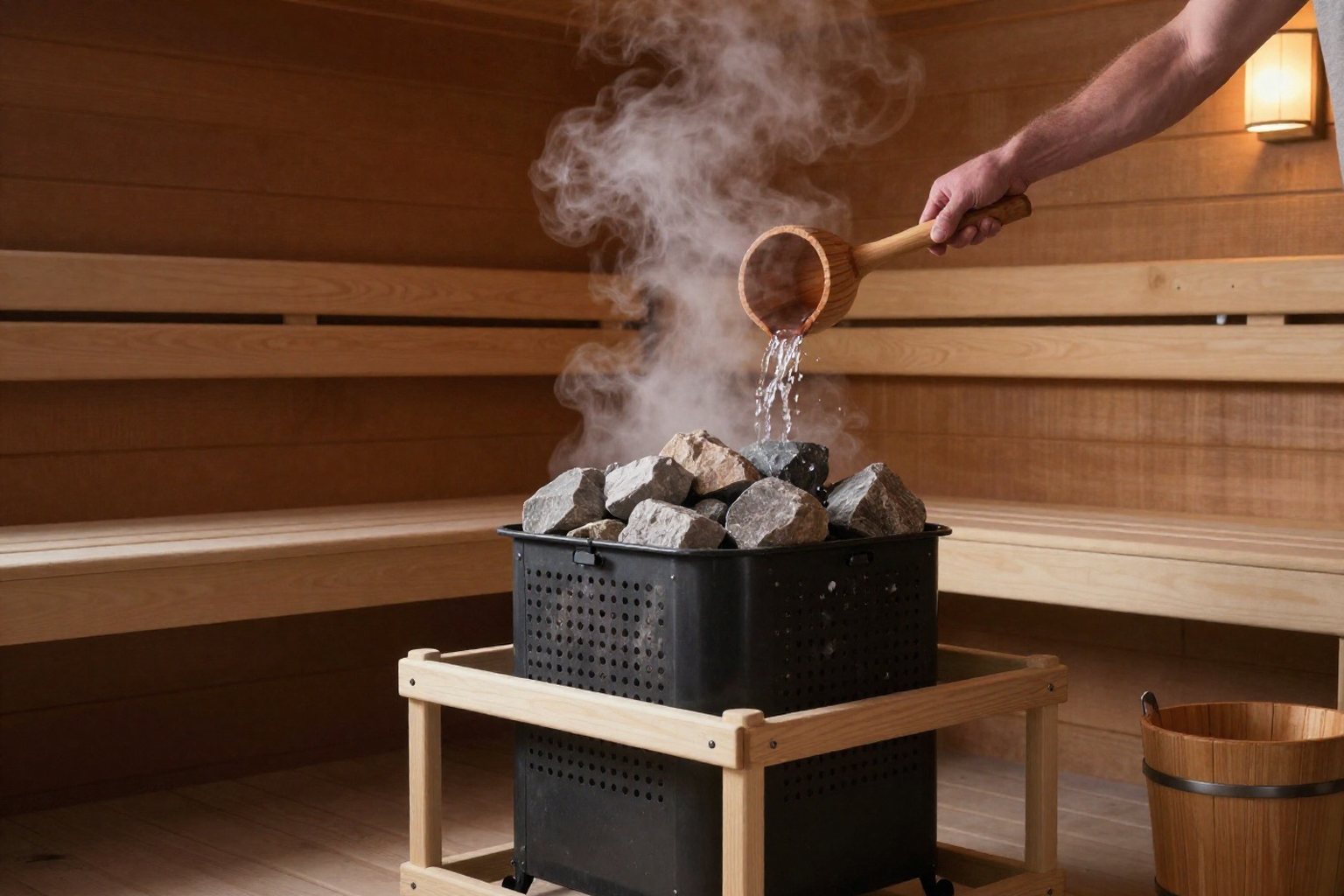
Sauna, steam room or infrared: all three get you hot and sweaty, and that's about where the likeness ends. A traditional sauna heats the air with a stove and a pile of stones. A steam room fills the air with water until it fogs. An infrared sauna warms you with panels while the air stays milder. For a home, the questions that decide it are the unglamorous ones (your outlet, your floor, your space, how much fuss you'll put up with), so that's where this guide spends its time.
Affiliate disclosureAs an Amazon Associate we earn from qualifying purchases made through links on this page. Commissions never change our ratings.
Three kinds of heat, side by side
In short: go traditional if you want the hottest air and the hiss of water on stones, and you have outdoor space plus an electrician on call. Go infrared if you want a cabin you'll use on a weeknight, indoors, on an ordinary outlet. Go steam if wet heat is your thing, and accept that at home it nearly always means a fabric tent with a steamer pot, because a real steam room is a tiled renovation.
A traditional sauna, the Finnish kind, has a heater loaded with stones. The heater warms the air, the air warms you, and a ladle of water on the stones throws up a short burst of steam. An infrared sauna has no stove at all: panels in the walls give off radiant heat that lands on your skin, so the air never needs to get as hot. A steam room runs on a generator that boils water and pushes it in until the air is saturated.
The clearest way to see the gap is a cabin that does both. The Smartmak 3-4 person hybrid pairs far-infrared heaters with a 4.5 kW sauna stove, and its listing gives the two modes very different ceilings: up to 149°F (65°C) on infrared, up to 195°F (90°C) on the stove. The two modes can't run at the same time.
| Traditional sauna | Steam | Infrared sauna | |
|---|---|---|---|
| Heat source | Electric stove with stones | Steam generator or steamer pot | Wall panels, no stove |
| Air | Dry, steam when you ladle water | Saturated, foggy | Dry, always |
| Top temperature stated | Up to 195°F (90°C) in stove mode | Up to 130°F on a steam tent | 135°F to 149°F on the cabins below |
| Power | 4.5 to 6 kW heaters | 1,200 to 1,400 W steamers | From a 15-amp, 120 V plug |
| Where it lives | Mostly outdoors: barrels, cabins | Tiled room, or a portable tent | Indoors, carpet included |
| Upkeep | Stones, bucket, drying the wood | Refilling, drying the fabric | A wipe with a damp cloth |
Dry or wet: what the humidity changes
This is the "dry sauna vs wet sauna" question, and the honest answer is that a traditional sauna is both. It runs dry by default. Ladle water onto the stones and a wave of steam rolls down from the ceiling, then fades as the stones dry off again. Finns call it löyly, and for plenty of people it's the whole point. The Breezestival 4-6 person barrel sells itself on exactly that: a dry sauna, or a steam session once you use the sauna rocks it ships with.
A steam room is wet all the time. The air holds so much water that it condenses on your skin, which is why steam feels hotter than the thermometer says and why it runs cooler than a sauna. An infrared sauna is dry, full stop. There are no stones, and water and heater panels don't mix: never pour or spray water inside an infrared cabin, whatever you've seen at a spa.
Curious what your own room is doing? An analog GLOBOTECH thermometer-hygrometer shows both numbers on one dial (70 to 250°F and 0 to 100% humidity, no batteries), and its listing names traditional saunas, infrared saunas and steam rooms alike. It's one of the few accessories we'd call useful in all three. Our guide to the sauna accessories worth having covers the rest.
Where each one can live
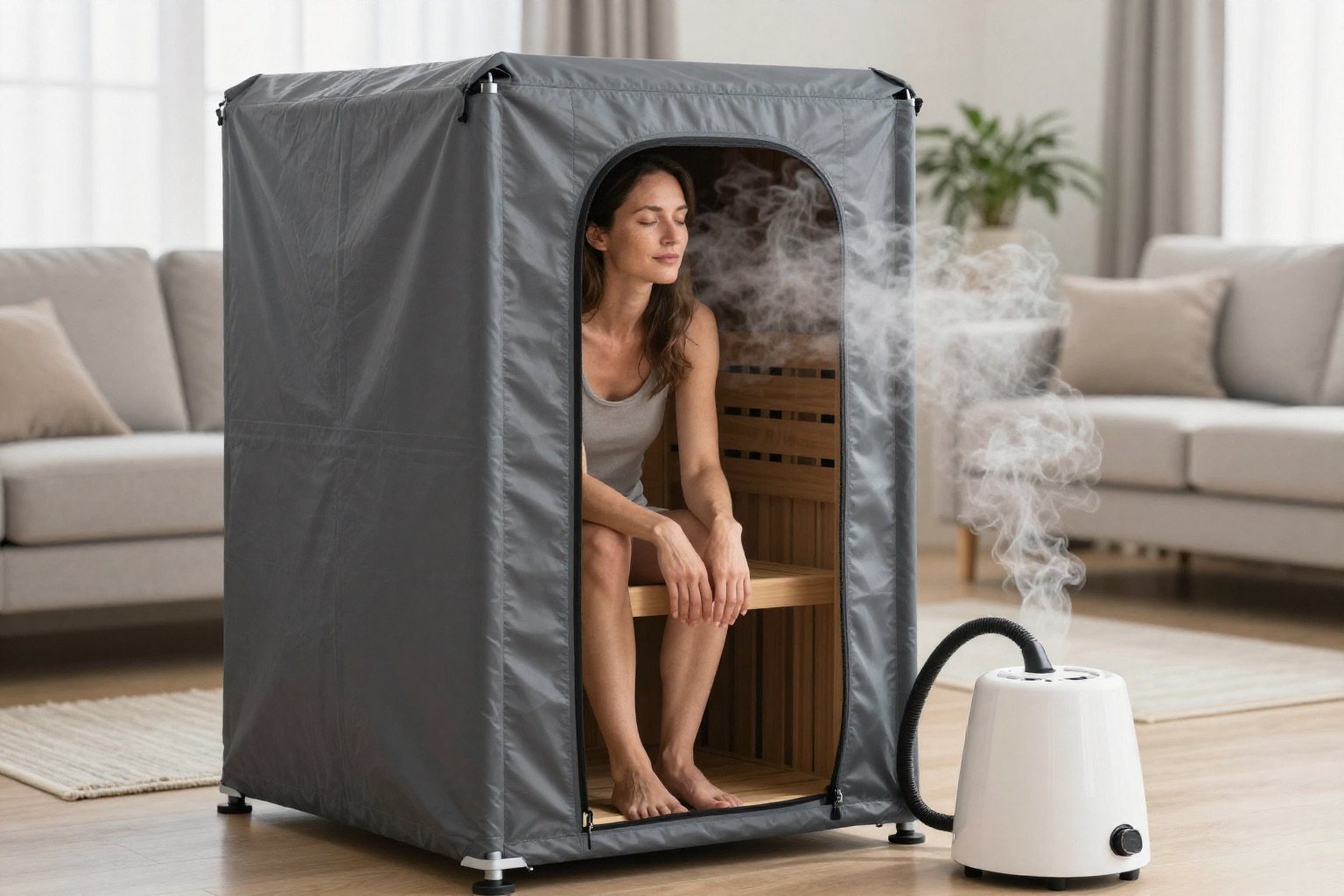
Space settles more home sauna decisions than heat does. A real steam room needs a sealed, waterproof room: tiled walls and ceiling, a sloped floor with a drain, a vapor barrier and a door that shuts tight. That's a bathroom-sized renovation with a contractor, not a box you order online. So for most people, steam at home means a portable steam tent: a fabric enclosure on a frame, a chair inside and a small steamer pot on the floor that pipes the steam in. The MUTAMA and the ISIDO both stand 71 x 32 x 32 inches, and the Garvee 2-person tent stretches to 71 x 48 x 35 inches with two chairs and two 3-liter steamers.
Traditional saunas mostly live outside. The Breezestival barrel measures 85 x 72.8 x 91.7 inches. The Smartmak hybrid is 71 x 51 x 84.7 inches and is delivered by truck and unloaded at the roadside, so work out how it travels from the curb to its pad before you order.
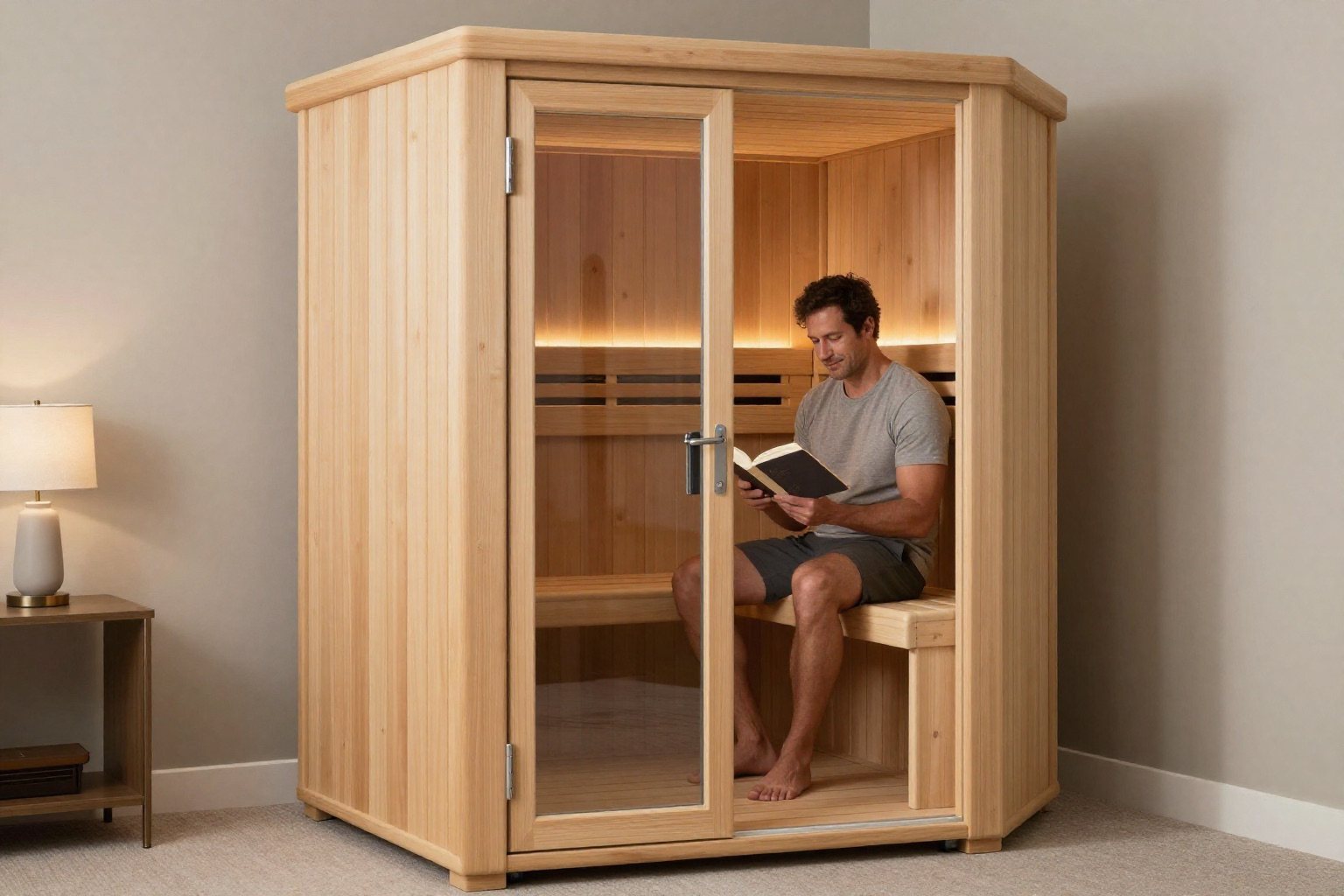
Infrared cabins are by far the easiest to fit indoors. The Dynamic Saunas Versailles has an interior of 43 x 37 x 68 inches and, according to its listing, assembles in about an hour on any indoor surface, carpet included. Measure first: our placement guide and the sauna size planner do the sums with you.
Power: a regular outlet, 240V or an electrician
Infrared wins this round in most homes. The Versailles runs on a standard 15-amp, 120-volt plug with no special wiring, which is a big reason a two-person indoor infrared cabin is the usual first sauna. Bigger cabins climb quickly: the 4-person OUTEXER outdoor sauna is a 2,600 W cabin on 240V.
Traditional heaters play in another league. The Breezestival barrel uses a 6 kW heater on a 220V supply, comes without any power cord, and its seller recommends that a qualified technician handles the installation and the electrical connection. The Smartmak hybrid pairs 3,500 W of infrared heaters with a 4,500 W stove. Price the electrician before you price the sauna.
Portable steamers sit at the other end: 1,200 to 1,400 watts on the tents we list, from a household outlet. Read the exact listing anyway. Our 110V vs 240V sauna guide shows how to read those lines, and anything beyond plugging into an existing outlet is a job for a licensed electrician.
Upkeep: water, wood and drying out
Steam brings the most chores, because water ends up everywhere. With a tent you fill the steamer before each session (the ISIDO's pot holds 3 liters) and let the fabric dry completely before you fold it away, or it will start to smell. The better steamers switch themselves off when they run dry: the MUTAMA lists boil-dry protection that cuts the power when the water gets low.
A traditional sauna wants a bucket and ladle, a little attention for the stones, and the door left open after use so the wood can dry. A set like the Northwood cedar bucket and ladle holds 1 gallon (4 liters), with about 3.4 ounces (100 mL) per ladle. Infrared is the lightest of the three: no water, so care comes down to a towel on the bench and a wipe with a damp cloth. Our maintenance guide lists what should never touch untreated wood.
How a session feels
Comfort is personal, so here's how the three differ, minus the wellness promises listings love to make. A traditional sauna is the most intense: hot air on your face, and that rush when water hits the stones. Infrared is gentler on the air side. The cabin stays milder (the Versailles lists a comfort range of 115 to 130°F), the warmth builds on your skin, and you can read or listen to music without the air biting. A steam session is wet and enveloping: fog, damp skin and air you can feel on every breath.
Heat-up time matters on a weeknight, too. The OUTEXER lists 20 to 25 minutes to reach its set temperature, the Smartmak's infrared mode 10 to 15, and the ISIDO steamer 6 to 10. How hot and how long is your call; questions about your body belong with your doctor. Our guide to the first sessions at home covers the comfort side.
So which one fits your home?
- Apartment, rental or no spare room: a portable unit. Dry heat in a fold-up box like the SereneLife Portable Sauna Box (three carbon panels, up to 140°F), or wet heat in a steam tent like the ISIDO. Browse every portable sauna we rate.
- A spare room and an ordinary outlet: an infrared cabin. Start with our best 2-person infrared saunas, or the full-spectrum ranking if you want the extra lamps.
- A yard, a budget for the electrician and a craving for löyly: a traditional barrel or cabin. If one person in the house wants infrared and another wants stones, a hybrid like the Smartmak covers both, one mode at a time.
Our take: most people reading this will be happiest with infrared, because it's the one that fits indoors, plugs in and actually gets used on a Tuesday. But if the sound of water on hot stones is what you're after, no panel will give you that. Our ranking of the best home saunas puts cabins and portable units side by side, and if you're still torn between wood and fabric, read wood cabin vs portable fabric sauna.
Our rated picks
The three best-rated models of our best home infrared saunas ranking, from the buyer review record and the listed specs.


Product images: Amazon listings
Frequently asked questions
Is a sauna or a steam room better?
Neither wins outright. A sauna gives you hotter, drier air, with steam whenever you ladle water on the stones; a steam room gives you wet heat at a lower temperature. At home, practicality often decides it: saunas come as cabins and barrels you can buy and assemble, while a real steam room is a tiled renovation. For health questions, ask your doctor.
What is the difference between a dry and a wet sauna?
A dry sauna runs without added water. A wet sauna is the same traditional sauna with water ladled onto the hot stones, which releases a burst of steam. Infrared saunas are always dry, and a steam room is always wet.
Can you pour water in an infrared sauna?
No. There are no stones to pour it on, and water does not belong near the heater panels or the controls. If you want steam, you need a traditional sauna with a stove, or a steam unit.
Can I have a steam room at home without renovating?
Yes, as a portable steam tent: a fabric enclosure with a chair and a 1,200 to 1,400 W steamer pot. The ISIDO and the MUTAMA list 3-liter steamers and 71-inch-tall enclosures. It is not a tiled steam room, but it brings wet heat to a corner of the living room.
What is a non-infrared sauna?
Usually a traditional sauna: a stove that heats stones and air. The electric heaters in the traditional saunas we list run at 4.5 to 6 kW, and the 6 kW barrel needs a 220V supply wired by a professional, while a small infrared cabin like the Versailles runs on a regular 120V plug.
Which one heats up fastest?
Going by the listings, a steam tent: the ISIDO lists 6 to 10 minutes. The Smartmak hybrid lists 10 to 15 minutes in infrared mode, and the 4-person OUTEXER infrared cabin 20 to 25 minutes to reach its set temperature.
Sources and further reading
- Smartmak hybrid listing: infrared and stove modes, stated temperatures and power (exact listing)
- Breezestival barrel listing: 6 kW heater, 220V supply, dry and wet use (exact listing)
- ISIDO steam tent listing: 3-liter steamer, heat-up time and size (exact listing)
- Versailles listing: 120V plug, comfort range and indoor assembly (exact listing)